Introduction: Reducing the Risk of Nuclear Weapons Use in Northeast Asia
Shatabhisha Shetty
October 7, 2024
This report is simultaneously published by the Asia-Pacific Leadership Network, Nautilus Institute, and the Research Center for Nuclear Weapons Abolition, Nagasaki University (RECNA).
It was first published in the Journal for Peace and Nuclear Disarmament.
Acknowledgements: This article was commissioned by the Asia-Pacific Leadership Network.
Abstract
Keywords: Nuclear Weapons; Northeast Asia; Korean Peninsula; Arms Control; Nuclear Risk Reduction
Authors’ Profile:
Full text (PDF) is here.
The views represented herein are the author’s own and do not necessarily reflect the institutional positions.
The page for this project is here.
3rd Essay Contest Award Ceremony Held [JPN]
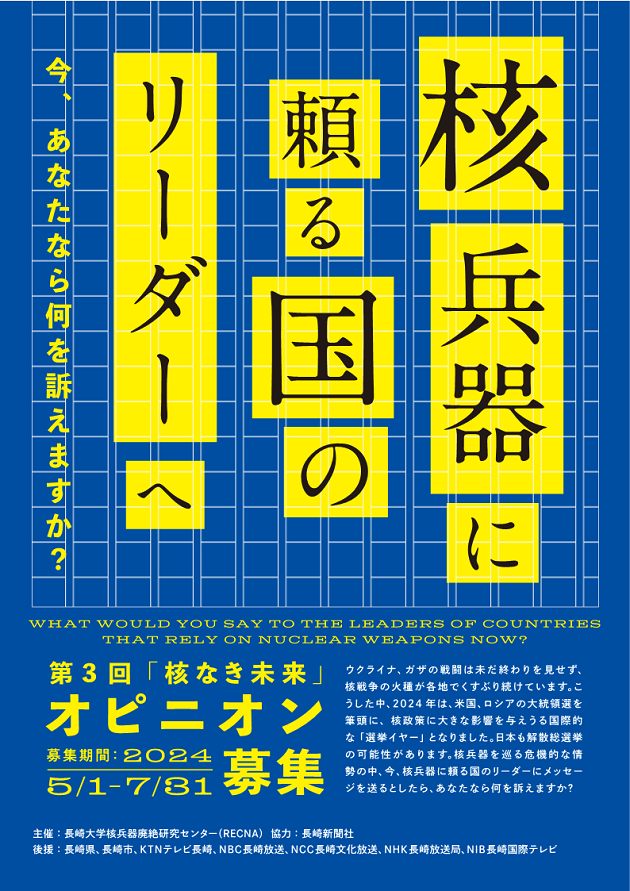
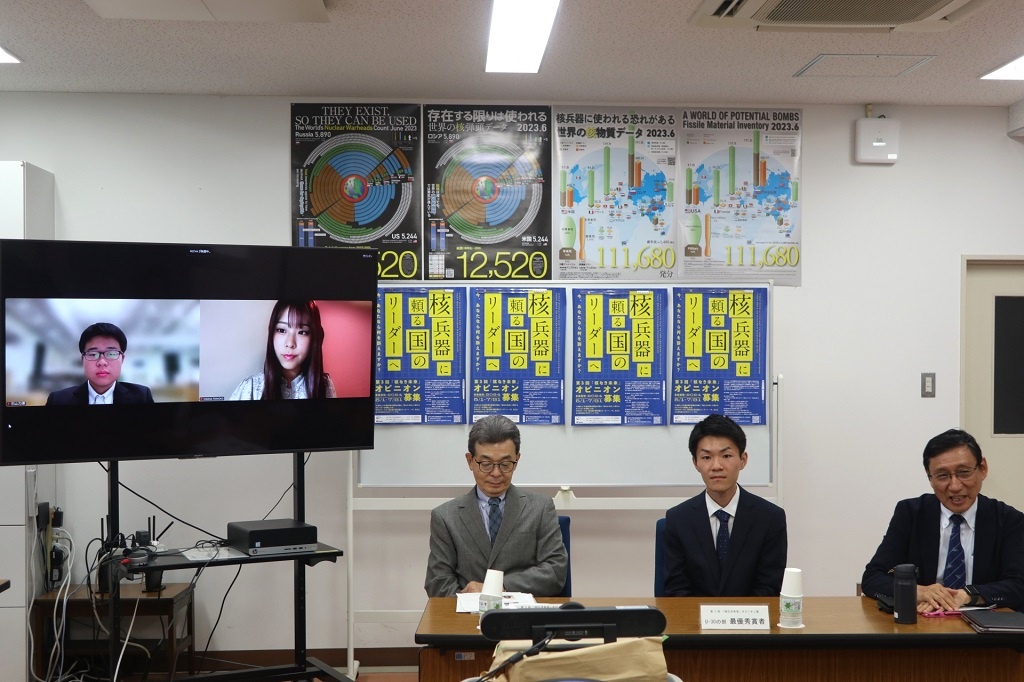
The Research Center for Nuclear Weapons Abolition, Nagasaki University (RECNA) has selected Grand Prize and Second Prize Award winners in the U-20 (16-20 years old) and U-30 (20-30 years old) categories for the third annual “Opinions on a Nuclear Weapons Free Future” and held an award ceremony as follows.
The two Grand Prize “opinions” were published in full in the September 22, 2024 issue of the Nagasaki Shimbun. (A Japanese article in the electronic edition of the same newspaper)
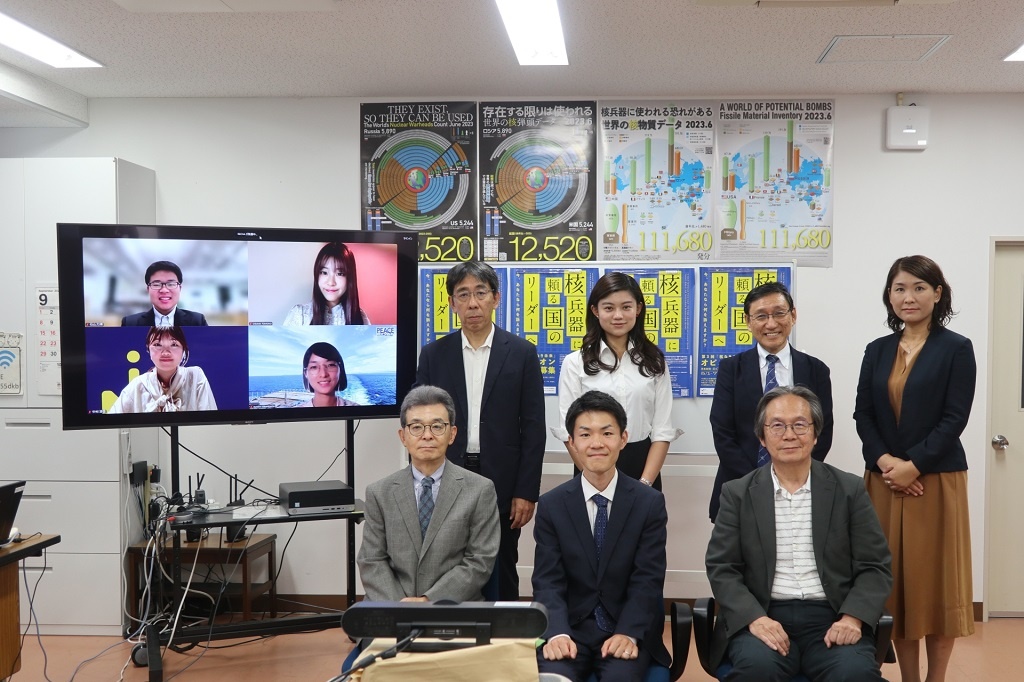
【 3rd “Opinion” Contest Award Ceremony 】
 |
 |
|
| Group photo of award ceremony attendees | Award winners being interviewed |
| DATE/TIME: |
Saturday, September 21, 2024 Award Ceremony: 13:00-14:00 Press Interviews: 14:00-14:30 |
|---|---|
| VENUE: |
1st floor, Research Center for Nuclear Weapons Abolition, Nagasaki University |
| PROGRAM: |
(MC: Keiko Nakamura, Associate Professor, RECNA) 1. Opening Remarks by Prof. Fumihiko Yoshida, Director of RECNA 2. Announcement of Winners and Award Ceremony
U-20 Division
U-30 Division 3. Comment on the awarded essays 4. Comments by the other members of the Selection Committee 5. Group Photography |
| PRESS Interviews: |
Speakers: Mr. Seirai, Award winners Moderator: Prof. Tatsujiro Suzuki, RECNA |
Winners of the 3rd Essay Contest Announced [JPN]
The Research Center for Nuclear Weapons Abolition, Nagasaki University (RECNA) held a call for “opinions” applying to the 3rd Essay Contest on “Nuclear Weapons and Our Future”, with the aim of raising awareness of the importance of nuclear weapons issues among the younger generation and fostering human resources who can contribute to the realization of a peaceful international society.
We are pleased to announce that we have selected one Grand Prize winner and one Second Prize winner in each of the U-20 (16 to 20 years old) and U-30 (20 to 30 years old) divisions.
[⇒ 3rd Essay Contest Award Ceremony]
【 Winners: 2 Grand Prize Winners, 2 Second Prize Winners 】
* Age at time of application.
U-20: Grand Prize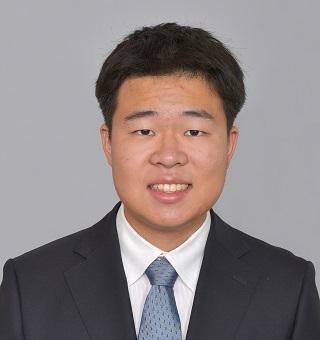 |
Riki Ishiyama(17 years old)
Currently enrolled in Berkshire school in Massachusetts. United States. |
|
|---|---|---|
U-30: Grand Prize |
Atsuhito Nishiyama(27 years old)
Lives in Kyoto City. Office worker. |
|
U-20: Second Prize |
Tomoko Ogawa(18 years old)
Currently enrolled in Ritsumeikan Asia Pacific University. |
|
U-30: Second Prize |
Saki Okamoto(24 years old)
Currently enrolled in Faculty of Engineering, The University of Tokyo. |
【 U-20: 6 Finalists excluding winners / 12 Total Applicants 】
【 U-30: 14 Finalists excluding winners / 39 Total Applicants 】
Vol.7, Issue 1 of Journal for Peace and Nuclear Disarmament (J-PAND) is now available online. There are 20 open access articles.
For the issue, see here. This is the second special issue on “Irreversibility in Global Nuclear Politics,” which carries case study articles. Another special feature of the issue is“ Reducing the Risk of Nuclear Weapons Use in Northeast Asia,” one of the RECNA’s recent projects.
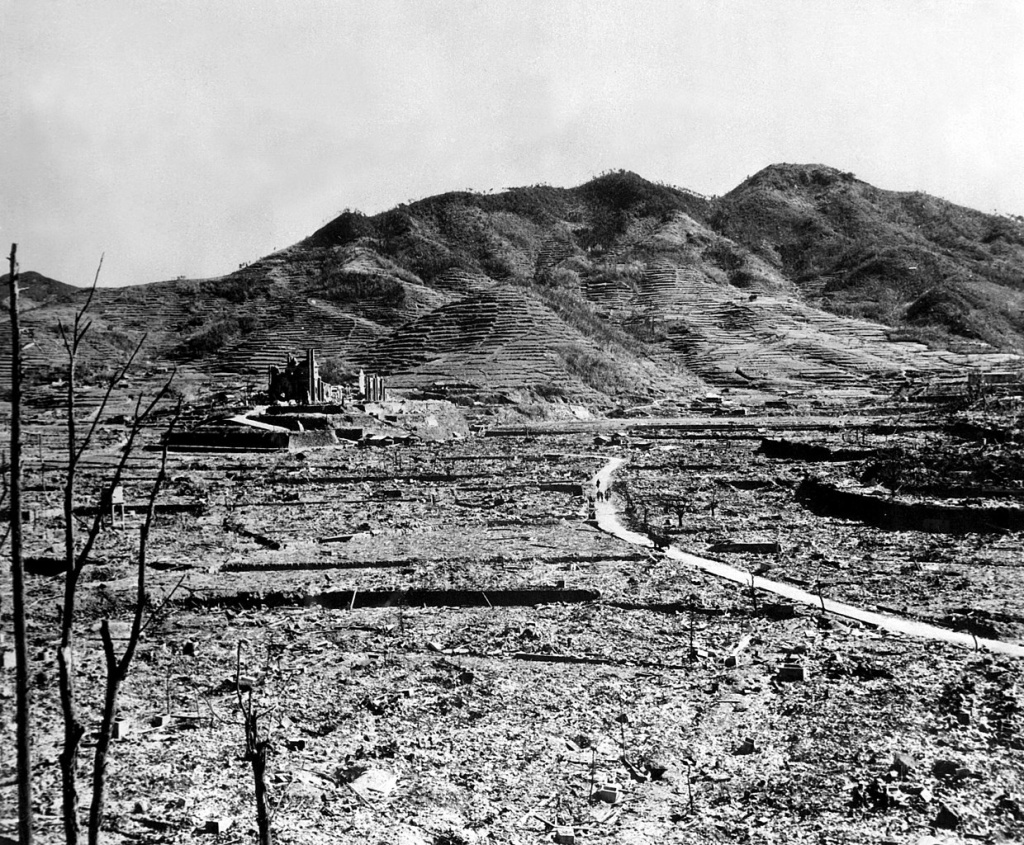
U.S. National Archives, 1945. 77-AEC-52-4459.
The Political Reckoning in a Post-Nuclear Use Landscape
Rabia Akhtar
July 11, 2024
This report is simultaneously published by the Asia-Pacific Leadership Network, Nautilus Institute, and the Research Center for Nuclear Weapons Abolition, Nagasaki University (RECNA).
It was first published in the Journal for Peace and Nuclear Disarmament.
Acknowledgements: This article was commissioned by the Asia-Pacific Leadership Network.
Abstract
Keywords: nuclear weapons; Asia-Pacific; North Korea; arms control; deterrence
Authors’ Profile:
Full text (PDF) is here.
The views represented herein are the author’s own and do not necessarily reflect the institutional positions.
The page for this project is here.
No First Use Can Still Help to Reduce US-China Nuclear Risks
Adam Mount
July 2, 2024
This report is simultaneously published by the Asia-Pacific Leadership Network, Nautilus Institute, and the Research Center for Nuclear Weapons Abolition, Nagasaki University (RECNA).
It was first published in the Journal for Peace and Nuclear Disarmament.
Acknowledgements: This article was commissioned by the Asia-Pacific Leadership Network.
Abstract
Keywords: nuclear; no first use; China
Authors’ Profile:
Full text (PDF) is here.
The views represented herein are the author’s own and do not necessarily reflect the institutional positions.
The page for this project is here.
East Asia’s Alliance Dilemma:
Public Perceptions of the Competing Risks of Extended Nuclear Deterrence
Lauren Sukin and Woohyeok Seo
June 7, 2024
This report is simultaneously published by the Asia-Pacific Leadership Network, Nautilus Institute, and the Research Center for Nuclear Weapons Abolition, Nagasaki University (RECNA).
It was first published in the Journal for Peace and Nuclear Disarmament.
Abstract
Keywords: nuclear; alliances; East Asia; proliferation; security
Authors’ Profile:
Woohyeok Seo is a Ph.D. Candidate in International Relations at the London School of Economics and Political Science in the United Kingdom.
Full text (PDF) is here.
The views represented herein are the author’s own and do not necessarily reflect the institutional positions.
The page for this project is here.
“World’s Fissile Material Data” 2024 [All Lists]
As was the case last year, the total amount of highly enriched uranium (HEU) declined but the total amount of separated plutonium increased, and the increasing tendency continues.
The total inventory of HEU was 1,255 tons, equivalent to 19,610 warheads (a decrease of 5 tons or about 70 warheads from last year). However, the overall rising trend in separated plutonium continues, with an increase of 7 tons in plutonium for civilian use, bringing the total inventory to 560 tons, equivalent to 93,270 warheads (an increase of 8 tons or about 1,270 warheads from last year). As a result, the total inventory amount increased to equivalent to 112,880 warheads, an increase of around 1,200 warheads from last year (111,680 warheads).
◆ The two images to the right can be enlarged by clicking on them. You can also view and download the following PDF versions.
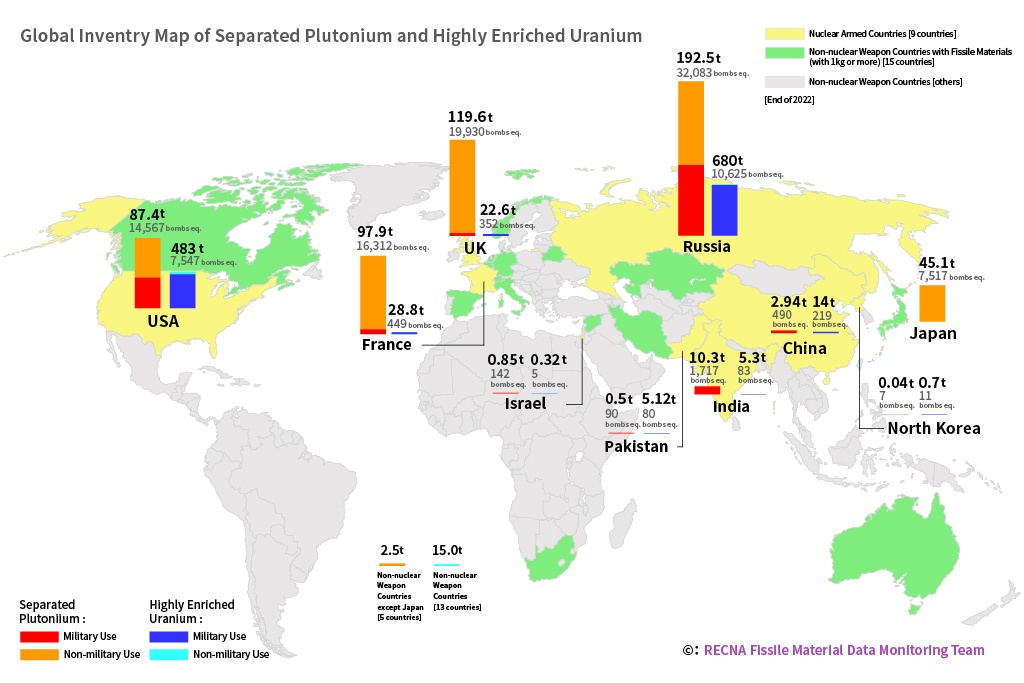 ・The 2024 Global Inventory Map of Fissile Material (PDF)
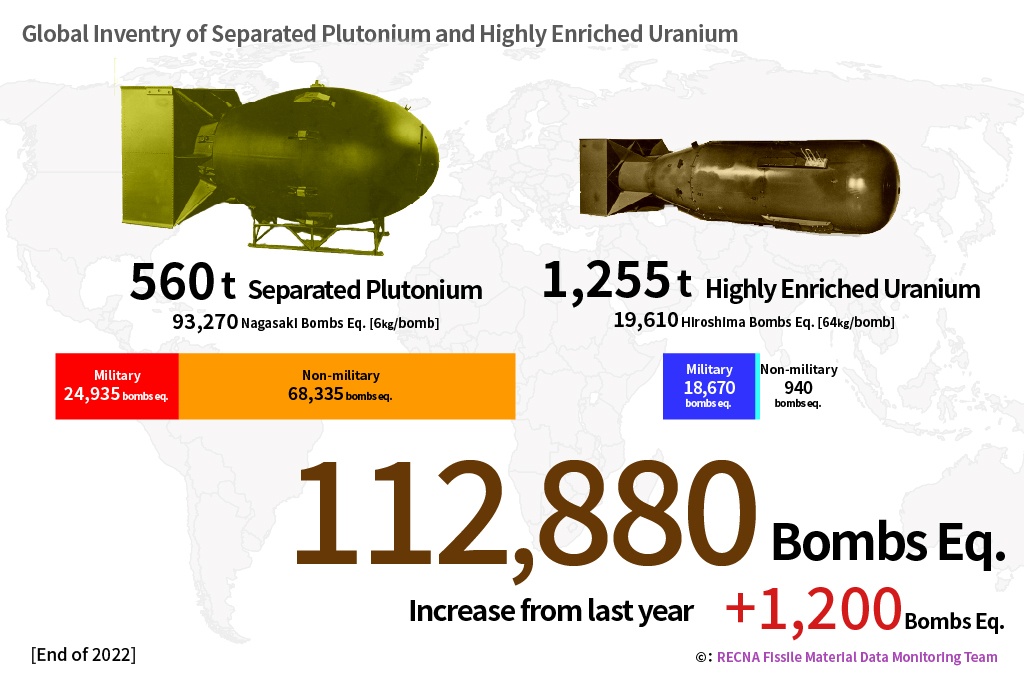 ・The 2024 Global Inventory of Fissile Material (PDF)
◆ You can see the original data of the map from the following links.
・Global Inventory of Separated Plutonium
・Global Inventory of Highly Enriched Uranium
◆ You can see previous “World’s Fissile Material Data” from [All Lists].
“World’s Nuclear Warheads Data” 2024 [All Lists]
The 2024 World’s Nuclear Warheads Data have been published. Please click on the following thumbnail images and download the pdf posters.
| Japanese | English | Korean | |
| Jun. 2024 | 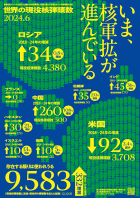 |
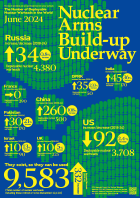 |
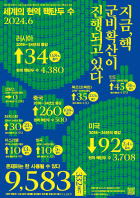 |
◆we have released a newly revamped “Explanatory Leaflet” and “Digital Guide.”
◇ You can see previous “World’s Nuclear Warhead Data” from [All Lists].